Blender vs Food Processor: Which Do You Need? (October 2026)
For the blender vs food processor choice, pick a blender for drinks and smooth mixtures or a food processor for chopping, slicing, shredding and dough. A combo suits kitchens that use both functions often and have room for the attachments.
On this page (10 sections)
- Blender vs food processor: what is each best at?
- Who should buy a blender and skip a processor?
- Who should buy a food processor and skip a blender?
- When does a blender and food processor combo make sense?
- Which is better for soup, salsa, dips and dough?
- How much capacity, counter space and power do you need?
- How do you set up and use each appliance well?
- Which is easier to clean and keep ready?
- What are the most common buying mistakes?
- Blender vs food processor: which should you buy first?
Choose a blender for smoothies, shakes and smooth mixtures, or a food processor for chopping, slicing, shredding and dough. The blender vs food processor decision starts with the texture you want and the kitchen work you repeat.
Think about tomorrow's breakfast and dinner: a drink points toward a blender, while shredded slaw and chopped vegetables point toward a processor. If both are regular jobs, a combo may earn its extra attachments.

Blender vs food processor: what is each best at?
A blender suits smooth, flowing mixtures; a food processor suits controlled cuts and thicker food prep. Their containers and tools shape what they do well.
A blender's pitcher helps ingredients move through the blades when a recipe has enough liquid. A processor's broad work bowl gives solid ingredients room to move, while discs cut food as it passes through a feed tube.
| Kitchen job | Better starting point | What matters |
|---|---|---|
| Smoothies and protein shakes | Blender | A pitcher or cup suited to your serving size |
| Frozen drinks | Blender designed for ice | Ice-crushing capability and correct loading |
| Smooth soup | Blender | Temperature approval in the exact model's manual |
| Chopped salsa | Food processor | Short pulses for control over piece size |
| Sliced vegetables or shredded cheese | Food processor | The correct cutting disc |
| Hummus and thick dips | Food processor | A work bowl that suits thick mixtures |
| Dough | Processor or equipped combo | Approved recipe amounts and suitable tools |
Blender vs food processor: where do their jobs overlap?
Both can make sauces, purées and some dips, but recipe thickness changes the better choice. A pourable dressing usually suits a blender, while a thick bean dip often suits a processor.
Adding water to help a blender move a thick mixture can leave you with a thinner recipe than intended. Choose the tool that handles the texture you want, rather than changing dinner to suit the appliance.
Neither machine replaces every knife task. A small garnish may take less time to chop by hand than to load, process and wash a full bowl.
Who should buy a blender and skip a processor?
Buy a blender when drinks and smooth recipes dominate your routine. Skip a separate processor if you rarely slice, shred or prepare large amounts of solid food.
Smoothies, shakes and frozen drinks are clear reasons to choose one. For a household making several servings at once, a full-size pitcher makes more sense than repeatedly filling a small cup.
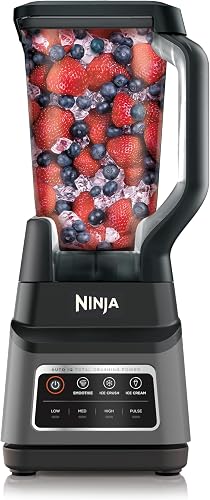
The Ninja Professional Plus BN701 has a 72 oz pitcher with a 64 oz maximum liquid capacity. Its Total Crushing blades and 3 Auto-iQ programs suit shared batches of smoothies and frozen drinks.
Choose it if drink making is the job you want to simplify. Skip it as a substitute for vegetable-prep equipment because it has no slicing or shredding discs.
Its large pitcher may also be unnecessary if you usually make one small shake. Match the container to your normal serving, rather than buying extra capacity for an occasional gathering.
Our best blenders for smoothies guide focuses on drink making. For a broader choice, the guide to choosing a blender explains how jar size, blades and controls affect everyday use.
Who should buy a food processor and skip a blender?
Buy a food processor when cutting, mixing and batch prep take most of your time. Skip it as your first appliance if your main goal is a daily drink.
A processor earns its space when you shred vegetables for several meals, chop ingredients for sauces or prepare dips for a group. Changing tools lets you move between chopped pieces, slices and shreds.
The Cuisinart 14-Cup Food Processor includes a chopping/mixing blade, a 4 mm slicing disc and a shredding disc. Its on and off/pulse buttons give you straightforward control over chopping.
This is a sensible fit for cooks who prepare several ingredients before starting dinner. It also supports purées, dips and dough, so its value extends beyond cutting vegetables.
Skip it if changing slice thickness is a priority because its slicing and shredding tools aren't adjustable. Its 18 lb weight also favors a reachable storage spot or a regular place on the counter.
For occasional small prep, consider whether a knife and grater already handle your needs. A large bowl saves little effort if assembling and washing it takes longer than the job.
When does a blender and food processor combo make sense?
A combo makes sense when you use both functions often and want a shared motor base. It still needs room for the containers, lids and cutting tools.
The Ninja Foodi Power Blender & Processor pairs a 72 oz pitcher with an 18 oz smoothie bowl maker and a 24 oz cup. The bowl maker has a built-in tamper for thick mixtures.
Its processing tools include a feed chute lid, reversible slicing/shredding disc, grating disc and dough blade. Variable speed control and 7 Auto-iQ programs provide options for drinks, bowls, spreads and food prep.
Choose this system if your week includes smoothies, shredded vegetables and dough. The smaller containers also give you options beyond using the main pitcher for every recipe.
Skip a combo if only one of those jobs matters to you. Unused accessories take storage space without reducing your cooking work.
A shared base also means tasks happen in sequence. If one person makes drinks while another prepares dinner, separate appliances allow both jobs to happen at once.
Our best blender and food processor combos guide helps compare systems by the tools you'll actually use.
Which is better for soup, salsa, dips and dough?
Choose by finished texture and recipe demands, rather than treating every soft food as a blending job. Smooth soup, chunky salsa and bread dough need different handling.
Smooth soup and pourable sauces
A blender is the direct choice for a smooth soup or pourable sauce, but hot-liquid approval must come from the exact model's manual. A soup recipe in a guide doesn't establish that a container accepts hot ingredients.
Let soup cool unless the manual expressly permits hot blending, then follow its temperature, fill and lid directions. Our guide to hot liquids in Ninja blenders explains why model-specific instructions matter.
Don't blend hot liquid in a sealed personal cup. Steam needs handling designed for that purpose, and a cup intended for cold drinks isn't a substitute.
Chunky salsa and thick dips
A food processor suits chunky salsa because short pulses let you stop while pieces remain. Cut ingredients into similar sizes first so large chunks don't need extra processing after smaller ones are already fine.
For thick dips, stop and scrape only after the blades have stopped and the appliance is unplugged. Keep a spatula away from moving blades, even if ingredients collect on the bowl wall.
Dough and pastry prep
Use a processor or combo whose instructions cover the dough you want to make. The Cuisinart supports kneading, while the Ninja Foodi system includes a dedicated dough tool.
Follow recipe limits rather than filling the bowl by eye. Dough is dense, and a container's total capacity doesn't tell you how much dough the motor can handle.
Avoid running pastry mixtures longer than needed. Extra processing can warm the ingredients and change the texture you're trying to keep.
How much capacity, counter space and power do you need?
Choose normal batch size and usable space first, then compare power within the right appliance category. A higher watt number doesn't add slicing discs or turn a drink pitcher into a dough bowl.
Don't compare the BN701's 1400 peak watts or the Foodi system's 1600 peak watts directly with the Cuisinart's 720-watt motor as a quality ranking. Peak power figures and different appliance designs don't provide that comparison.
Our blender wattage guide explains how to use power figures alongside blades, containers and intended jobs.
Container capacity also needs context. A processor bowl's full volume isn't its working allowance for every liquid recipe, just as a pitcher's total size can exceed its liquid fill line.
For serving sizes, see what size blender you need. Plan around the amount you make most days, with enough room to follow the recipe's fill limits.
Measure the counter, cabinet opening and storage shelf before buying. Leave room to lift off a lid, remove the container and load a processor's feed tube.
For a combo, picture where every attachment will go. A single base can reduce the number of motors on the counter while leaving you with several pieces in a drawer.
How do you set up and use each appliance well?
Start with the right tool, a secure assembly and the correct fill level. Good setup prevents avoidable stops and gives you more control over texture.
Read the assembly directions before the first use, especially when fitting processor discs and stems. Set the base on a dry, stable surface and make sure the bowl or pitcher is locked as directed.
For blender recipes, follow the model's loading order and include the required liquid. If ingredients stop moving, switch off before adjusting them instead of repeatedly running a stalled mixture.
Use a tamper only when it's supplied or approved for that container, following its directions. A spoon or loose utensil must never go into a running blender.
For chopping, start with similarly sized pieces and use short pulses. Check between pulses because continuous running can turn chopped vegetables into a paste.
When slicing or shredding, use the supplied pusher rather than your fingers. Trim food to fit the chute instead of forcing an oversized piece through it.
Turn off and unplug the machine before changing blades or discs. Match the attachment to the task each time, particularly with a combo whose parts serve different recipes.
Which is easier to clean and keep ready?
The easiest appliance to live with is the one whose used parts you can wash, dry and store easily. Count the pieces each recipe needs, rather than judging cleanup by the motor base alone.
The BN701's pitcher and stacked blade assembly are top-rack dishwasher safe. The Cuisinart includes dishwasher-safe parts, and the Foodi system's containers, lids, discs and blade assemblies are dishwasher safe.
Follow each manual's placement and care directions, since approval for a container doesn't automatically cover every part. Keep the motor base out of water and wipe it as directed.
Clean promptly so sauces and thick mixtures don't dry around blades or seals. Handle cutting edges carefully, and avoid leaving loose blades hidden in cloudy dishwater.
Allow parts to dry fully before closing containers or putting them away. Store discs and blades where their edges won't be exposed when someone reaches into a drawer.
For more detailed care steps, see how to clean a Ninja blender.
What are the most common buying mistakes?
The biggest mistake is buying extra functions instead of solving your main kitchen job. A machine earns its space through repeated use, not the length of its feature list.
- Choosing a blender for shredded vegetables: blending blades break food down; slicing and shredding need the correct processing tools.
- Buying a large container for tiny portions: consider how often you'll use its capacity and how much space it needs.
- Treating every capacity as a fill allowance: liquid mixtures and dough may have lower limits than the container's full volume.
- Ignoring fixed cutting sizes: the Cuisinart's included discs don't offer adjustable settings.
- Expecting a combo to remove accessory storage: count its cups, lids, blades and discs before choosing a cabinet.
- Choosing on watts alone: power can't compensate for the wrong container or a missing attachment.
Blender vs food processor: which should you buy first?
Buy the appliance that removes your most repeated kitchen chore. Write down 3 meals or prep jobs from a normal week and identify the tool each one needs.
Choose the Ninja Professional Plus BN701 when shared smoothies and frozen drinks lead that list. Choose the Cuisinart 14-Cup Food Processor when vegetable prep, dips and dough take more of your time.
Choose the Ninja Foodi Power Blender & Processor when both groups appear often and you have a home for its attachments. If the second function is only an occasional need, start with the appliance you'll use every week.
For your blender vs food processor decision, give daily usefulness more weight than possible future recipes. If a blender wins, use the complete blender guide to narrow the container size and style.
Sources:
- Ninja Professional Plus BN701: See it on Amazon
- Cuisinart 14-Cup Food Processor: See it on Amazon
- Ninja Foodi Power Blender & Processor: See it on Amazon
Frequently asked questions
Can a blender replace a food processor?
A basic blender can replace a food processor for some sauces and purées, but it cannot make slices or shreds without processing attachments. If your recipes need chopped pieces, grated cheese or dough, choose a processor or a combo equipped for those jobs.
Can a food processor make smoothies?
A food processor can blend some mixtures, but a blender is the better first choice for regular smoothies because its pitcher suits liquid recipes. If frozen fruit and ice are part of your routine, choose a model designed for those ingredients and follow its loading directions.
Which appliance is better for chopping vegetables?
A food processor is the better choice for chopping vegetables into pieces, with short pulses giving you chances to check the texture before it becomes too fine. Use a slicing or shredding disc for those cuts, and start with similarly sized pieces when using the chopping blade.
Is a blender and food processor combo worth considering?
A combo is worth considering when you regularly make drinks and also slice, shred or prepare dough, since the right attachments cover both kinds of work. Count the containers, lids and blades you need to store before choosing one, because a shared base does not remove that storage need.
What should you buy first?
Buy a blender first if smoothies and shakes are regular meals, or a food processor first if vegetable prep and dough take more of your kitchen time. Write down your next week's meals and choose the appliance that removes the most repeated work, rather than the one with more functions.


