Can You Blend Hot Soup in a Ninja Blender?
For hot liquids in a Ninja blender, use only the temperatures and methods your exact model’s manual permits. If hot ingredients aren’t explicitly allowed, cool the soup to room temperature before blending.
On this page (8 sections)
- Can you blend hot liquids in a Ninja blender?
- Why can hot soup be risky in a blender?
- How should you prepare soup for blending?
- Which Ninja blender suits cooled soup and everyday prep?
- What matters most when buying a blender for soup?
- Which soup-blending mistakes should you avoid?
- How do you clean a Ninja blender after soup?
- Which Ninja blender should you choose for hot liquids?
Blend hot liquids in a Ninja blender only when your exact model’s manual explicitly permits it. Otherwise, cool the soup to room temperature before blending, then reheat it separately for serving.
For soup buyers, temperature permission comes before motor power, pitcher size, or extra attachments. The BN701, BL610, and BL770 offer different controls and prep tools, but none of those features establishes permission to blend hot soup.
Can you blend hot liquids in a Ninja blender?
Your exact model and container instructions decide whether hot blending is allowed. Permission for one Ninja appliance doesn’t carry over to another pitcher, processor bowl, or personal cup.
Find the model number on your appliance and match it to the manual. Our Ninja blender models guide can help you identify the model before comparing its directions with your recipe.
All 3 models here have plastic pitchers, but container material alone doesn’t settle the temperature question. Neither a soup recipe nor an ice-crushing feature replaces clear instructions for hot ingredients.
If you’re comparing the wider range, use our Ninja blenders guide alongside the best Ninja blender picks. Choose a model for the jobs you’ll actually do, with hot-liquid permission checked separately.
What confirms a Ninja blender can handle hot liquids?
Look for explicit temperature and use instructions for the exact container you plan to use. If the manual is unclear, ask Ninja or choose the cooled-soup method.
Don’t infer approval from a powerful motor, a large jar, or a button that sounds suitable for pureeing. Those features describe blending tasks, not safe ingredient temperatures.
Why can hot soup be risky in a blender?
Hot soup can release steam that creates pressure inside a sealed container. That pressure can force liquid out or dislodge the lid, creating a burn risk.
Never loosen the lid, remove a plug, or partly unscrew a blade assembly to improvise a vent. Follow a venting method only when the appliance’s instructions specifically describe it.
Pouring is another point where spills happen. Clear space beside the blender before transferring soup, and keep the container on the counter rather than holding it while filling.
Reduced steam doesn’t prove soup has reached room temperature. Thick soup can stay hot below the surface even when the top looks calm.
How should you prepare soup for blending?
Use permitted temperatures, manageable batches, and correctly assembled parts. If hot blending isn’t allowed, build cooling and reheating into your cooking plan.
- Read the directions for your model, container, and intended ingredients.
- Place the base on a dry, stable counter with room for filling and pouring.
- Check that the container, lid, and blade assembly are undamaged and fitted as directed.
- Add soup within the task’s fill limit, leaving any required space.
- Secure the lid and use the control sequence the manual specifies.
- Stop the appliance if it leaks, shifts, or makes an unusual sound.
For cooled soup, divide a large pot into smaller portions to help it cool promptly. Don’t leave perishable soup out for hours while waiting to blend, and refrigerate portions you won’t process promptly.
Thick mixtures may need smaller batches than thin liquids. If ingredients stop moving, switch off and unplug the blender before following the manual’s directions for clearing or adjusting the mixture.
Our guide to what size blender you need explains how serving size affects your choice. A bigger pitcher still needs working space around the ingredients.
Which Ninja blender suits cooled soup and everyday prep?
Choose the BN701 for programmed drink tasks, BL610 for manual control, or BL770 for added food processing. These are useful differences for everyday cooking, rather than reasons to assume hot-liquid compatibility.
Each has a 72 oz pitcher with a 64 oz maximum liquid capacity. Any lower limit for a particular recipe or task still takes priority.
Who should choose the Ninja Professional Plus BN701?
Choose the BN701 if you make family drinks as well as cooled soup and want preset options for those drink tasks. Its 3 Auto-iQ programs combine timed pulsing, blending, and pauses.
The 1400-peak-watt base and Total Crushing blades make frozen drinks and ice crushing part of its intended role. Use an Auto-iQ program for soup only if the instructions support that task and its ingredients.
Skip it if your main need is soup served straight from the stove and you don’t want a cooling step. Also choose another setup if a separate processor bowl or personal cups are essential to your routine.
The assembled blender is 17.5 inches tall, so measure under your cabinets and allow room to remove the lid. Store it where you can lift and pour the pitcher without reaching around other appliances.
Who should choose the Ninja Professional Blender BL610?
Choose the BL610 if you prefer manual push-button controls and mainly need a full-size blender. It fits a routine built around smoothies, frozen drinks, and permitted cooled mixtures without a processor attachment.
Its 1000-watt base powers Total Crushing blades. For a cook who wants to control when blending starts and stops, the manual layout is the main reason to choose it over preset programs.
Skip it if automatic drink cycles are a priority or you want one base for chopping and dough mixing. Buying a simpler blender makes sense only when its narrower set of tools covers your meals.
At 15.94 inches tall, it’s shorter than the other 2 models here. Still check cabinet clearance and leave enough space to handle the pitcher comfortably.
Who should choose the Ninja Kitchen System Pro BL770?
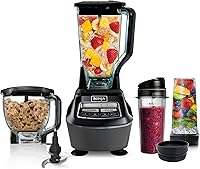
Choose the BL770 if chopping and dough mixing are regular kitchen jobs, alongside blending. Its 8-cup processor bowl gives you a separate tool for prep that a blender pitcher doesn’t replace.
The 1500-watt system includes chopping and dough blades, plus 2 personal cups with to-go lids. Those 16 oz cups suit individual drinks within their instructions, not an assumed shortcut for hot soup.
Skip this system if you only want to puree an occasional pot of soup. Extra containers and blades mean more storage and cleanup, so the attachments should earn their place in your kitchen.
Plan a safe storage spot for each blade before unpacking the system. Our blender versus food processor guide explains which meals benefit from the separate bowl.
What matters most when buying a blender for soup?
Put temperature permission first, then batch size and daily workflow. A blender that requires cooling can suit meal prep, but it adds a step when you want soup ready immediately.
- For immediate hot soup: choose an appliance whose instructions explicitly allow your intended temperature and method.
- For batch cooking: check how many permitted batches your usual recipe needs, including time for cooling and reheating.
- For mixed kitchen jobs: pay for processor bowls or cups only when you’ll use them regularly.
- For limited storage: measure both the assembled appliance and the space needed for loose attachments.
A suitable immersion blender can reduce transfers by blending in the cooking vessel, provided its instructions allow that use. Check its temperature limits and keep the blending head positioned as directed to limit splashes.
Don’t buy on wattage alone. Our guide to choosing a blender helps weigh jar size, controls, and blades against the food you make most often.
Which soup-blending mistakes should you avoid?
Avoid assuming every container has the same permissions. A pitcher, processor bowl, and personal cup can have different ingredient and fill instructions even when they share a base.
Don’t fill to the brim to save a batch. The container’s headline capacity isn’t the same as its permitted liquid fill, and thick recipes may call for less.
Don’t keep running a stalled mixture or reach into a connected appliance. Switch off, unplug, and follow the manual before moving ingredients or handling blades.
Avoid treating a dishwasher-safe part as permission to use it with hot food. Cleaning instructions and blending temperature limits answer different questions.
How do you clean a Ninja blender after soup?
Unplug the base and clean residue promptly, following the instructions for each part. Keep fingers away from blade edges and don’t leave loose blades hidden in cloudy dishwater.
The BN701’s BPA-free pitcher and stacked blade assembly are top-rack dishwasher safe. The BL610’s BPA-free pitcher is also top-rack dishwasher safe; follow its manual for the other parts.
The BL770’s cups, bowls, blades, attachments, and lids are dishwasher safe, with top-rack placement recommended. Wipe its motor base with a damp cloth and keep the base out of water.
Let permitted washed parts dry before storage, and keep blades in their containers or another safe location. Our Ninja blender cleaning guide covers routine cleanup in more detail.
Which Ninja blender should you choose for hot liquids?
For Ninja blender hot liquids decisions, rule out any model whose instructions don’t explicitly permit your intended use. If blending straight from the stove is essential, choose an appliance with clear approval for that job.
For cooled soup plus family drinks, pick the BN701 when you want Auto-iQ programs or the BL610 when you prefer manual controls. Choose the BL770 when its processor bowl and personal cups will also get regular use.
Before your first batch, match the container to the manual and plan the cooling, blending, and reheating steps. Keep our guides for Ninja blender use and care handy for follow-up care.
Frequently asked questions
Can you put hot soup in a Ninja blender?
Put hot soup in a Ninja blender only if your exact model’s manual explicitly permits it. If the instructions prohibit hot ingredients or leave the temperature unclear, cool the soup to room temperature, then follow the directions for ingredients, batch size, lid placement, and blending.
Why should you avoid blending hot liquid in a sealed blender?
Hot liquid can release steam and build pressure inside a sealed blender, potentially forcing liquid out or dislodging the lid. Use only a container and method approved for that temperature, and never loosen a lid or blade assembly to create your own venting method.
Can you blend hot soup in a Ninja personal cup?
Use hot soup in a Ninja personal cup only if the exact cup and blender instructions explicitly allow it. A closed cup can trap steam and pressure, so cool soup to room temperature when hot use isn’t permitted and follow all ingredient and fill limits.
How do you blend soup safely in a blender?
Follow your blender’s instructions for ingredient temperature, batch size, assembly, and lid use, cooling the soup first if hot blending isn’t allowed. Place the appliance on a dry, stable counter, stay within the permitted fill limit, and stop it if the container leaks or shifts.