Ninja vs Vitamix: Is a Blender Worth It? (October 2026)
In the Vitamix vs Ninja choice, pick Ninja for preset drinks and dishwasher cleanup or Vitamix for thick blends and manual texture control. Choose around your weekly recipes, available counter space and preferred cleanup routine.
On this page (11 sections)
- Vitamix vs Ninja: which should you choose?
- What do these Ninja and Vitamix models offer?
- Which blender suits your smoothies, sauces and thick recipes?
- Is a Vitamix worth more for daily blending?
- Will these blenders fit your counter and batch sizes?
- How should you set up and use either blender?
- Can you make hot soup in these blenders?
- Which blender is easier to clean?
- Which Vitamix model is the better match?
- Who should skip each blender?
- Which Ninja or Vitamix blender should you buy?
Choose Ninja for preset drink blending and Vitamix for thick recipes that need a tamper and manual control. This Vitamix vs Ninja comparison focuses on the Professional Plus BN701, 5200 and VX1, because the exact model matters more than the logo.
Start with your usual recipes, then consider cleanup and storage. A blender earns its place when it makes meals you already prepare easier, without adding a care routine you'll avoid.
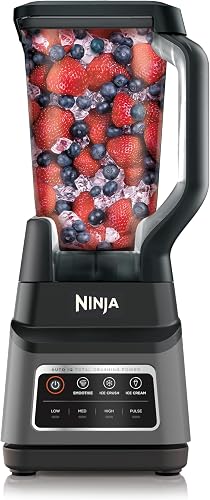

Vitamix vs Ninja: which should you choose?
Pick the Ninja BN701 for family smoothies and frozen drinks, the Vitamix 5200 for frequent cooking, or the Vitamix VX1 for variable speed and Pulse. Each fits a different way of preparing food.
The Ninja's programs suit someone who wants to load a drink recipe and let a timed cycle handle the blending pattern. The Vitamix models suit someone who wants to watch the mixture, change its texture and guide dense ingredients toward the blades.
Write down 3 recipes you expect to make every week. Mostly fruit drinks point toward Ninja; regular dips, purées and thick mixtures give the Vitamix tampers a clearer purpose.
For occasional use, focus on how easily the blender fits your kitchen routine. Extra controls offer little benefit if you rarely need them.
What do these Ninja and Vitamix models offer?
The main differences are controls, thick-blend tools and cleanup. Compare those features before motor numbers or brand reputation.
| Product | Best for | Capacity | Controls | Cleanup | Our score |
|---|---|---|---|---|---|
| Ninja Professional Plus BN701 | family drink batches | 72 oz pitcher, 64 oz max liquid | 3 Auto-iQ presets | Top-rack dishwasher-safe pitcher and blade assembly | 9.2 |
| Vitamix 5200 | frequent home cooks | 64 oz | 10 variable speeds plus High | Warm water and dish soap, 30 to 60 seconds | 8.5 |
| Vitamix VX1 | chunky sauce makers | 64 oz | Variable Speed Control and Pulse | Self-cleaning program | 7.6 |
The BN701 has a 72 oz pitcher with a 64 oz maximum liquid capacity. Both Vitamix containers hold 64 oz, so the Ninja's larger headline size does not mean you can add more liquid.
Ninja's 3 Auto-iQ presets combine timed pulsing, blending and pauses. The 5200 has 10 variable speeds plus High, while the VX1 provides variable speed and Pulse; both Vitamix models include a tamper.
Ninja describes the BN701 motor in peak watts, while the 5200 uses a horsepower figure. Those labels don't provide a shared measure of finished texture, so they shouldn't decide the comparison.
For model-specific context, see our guides to Ninja blender models and Vitamix models. Features from another blender in either range don't automatically apply here.
Which blender suits your smoothies, sauces and thick recipes?
Choose Ninja for programmed frozen drinks or Vitamix when controlling texture and keeping dense ingredients moving are priorities. Match the recipe's consistency to the tools you'll use.
Which Ninja or Vitamix blender suits smoothies and frozen drinks?
The BN701 is a practical choice for shared drink batches. Its Total Crushing blades are designed for ice, and its timed programs reduce the number of blending decisions you make.
A smoothie with plenty of liquid presents a different task from a spoonable frozen bowl. Follow a recipe for the blender you're using, since reducing the liquid can change how well ingredients circulate.
The Vitamix models fit drink makers who want to adjust speed as the mixture changes. On the 5200, Vitamix directs users to ramp up the variable control before using High for fully blended textures.
Our best blenders for smoothies guide covers more drink-focused choices. If you usually make one serving, compare personal blenders before committing to a full-size container.
Which is better for thick blends and nut butters?
The Vitamix models are the stronger fit for dense mixtures because they include tampers. Vitamix describes the VX1 for nut butters and frozen desserts, while the 5200's tamper helps keep thick ingredients circulating.
A tamper lets you guide food toward the blades without repeatedly stopping to scrape the container. Use only the supplied tool through the correctly fitted lid, following the model's instructions.
The BN701 does not include a tamper. Choose it for drink-focused use rather than buying it mainly for dense recipes that need frequent manual help.
Do not keep running a blender while the blades spin beneath a stationary mixture. Stop and follow the recipe's guidance on batch size, added liquid or repositioning ingredients.
Which suits salsa, sauces and purées?
The VX1 suits cooks who want Pulse for short bursts, while the 5200 suits gradual speed adjustments. These controls help you stop at a chunky texture instead of turning every recipe into a smooth sauce.
For salsa, prepare ingredients in similar-size pieces and check the mixture between bursts. A few oversized pieces can tempt you to blend longer than the rest of the batch needs.
For a pourable sauce, add liquid gradually once the ingredients begin moving. Adding too much at the start is harder to correct than thinning a thick sauce a little at a time.
Is a Vitamix worth more for daily blending?
A Vitamix can justify a higher cost when its tamper and manual controls serve several weekly recipes. For occasional drinks, the BN701's programmed approach may meet your needs without those extras.
Think beyond the first smoothie you plan to make. A blender used for breakfast, dinner sauces and thick dips has a broader role than one brought out only for frozen drinks.
Warranty coverage also differs: Vitamix backs the 5200 with a 7-year limited warranty and the VX1 with a 5-year limited warranty. Read the terms before buying, since a warranty is not a promise that every part or situation is covered.
Avoid choosing a model for recipes you only hope to start making. Base the decision on current habits, then treat new uses as a bonus.
Our guide on whether a Vitamix is worth it helps weigh the commitment against your routine. The useful question is how often you'll use its specific tools.
Will these blenders fit your counter and batch sizes?
Measure cabinet clearance, counter depth and storage space before choosing. A blender that's awkward to access is less likely to become part of your daily routine.
The BN701 measures 17.5 inches high, compared with 20.5 inches for the 5200 and 19.6 inches for the VX1. Allow room to remove the lid and lift the container, rather than checking assembled height alone.
Also measure the space where the base will sit. Leave the ventilation space required by the manual, and keep the cord clear of a sink or hot cooking surface.
For batch size, count the servings you actually pour. Our guide to choosing a blender size can help you decide whether a countertop pitcher fits your needs.
Both Vitamix containers are intended for small and large batches, but recipe volume still affects circulation. A tiny amount of thick sauce may need a different approach from a full drink batch.
Stay within the model's limits rather than filling to the rim. Splitting an oversized recipe into 2 batches gives ingredients room to move and makes pouring easier.
How should you set up and use either blender?
Start with correct assembly and a recipe suited to your model. Reliable blending depends on loading and circulation as well as the controls you choose.
Before the first use, wash the food-contact parts according to the manual. Set the base on a dry, level surface, then check that the container, blade assembly where applicable, and lid are correctly seated.
Use these habits for your first few recipes:
- Follow the loading order. Use the model's instructions rather than assuming every blade design needs the same arrangement.
- Prepare manageable pieces. Cut large ingredients down and remove pits, packaging and other material that doesn't belong in the blend.
- Measure the liquid. Free-pouring makes it harder to repeat a good result or work out why a mixture stalled.
- Watch circulation. Food moving through the blades matters more than simply letting the motor run longer.
- Stop before adjusting. Switch off and unplug before scraping, removing trapped food or handling the Ninja blade assembly.
Programs don't correct every ingredient ratio. If a smoothie remains too thick, pause and adjust according to the recipe instead of repeatedly restarting a cycle.
Manual controls benefit from the same discipline. Note a successful recipe's quantities so you can repeat the result without guessing each morning.
Can you make hot soup in these blenders?
The Vitamix 5200 can make hot soup through blade friction, according to Vitamix. The VX1 is also intended for hot soups, but use its own directions rather than assuming it heats ingredients the same way.
Separate heating from cooking. Soup reaching serving temperature does not establish that raw meat, beans or other ingredients have received the cooking they require.
Follow the exact model's hot-food limits and lid instructions. Keep your face and hands away from escaping steam, and do not transfer a hot recipe to another blender without checking its suitability.
For the BN701, don't treat frozen-drink capability as permission to blend hot liquids. Read our guide to hot liquids in Ninja blenders before planning soup around it.
Which blender is easier to clean?
Choose Ninja if dishwasher cleanup fits your routine, or Vitamix if you prefer cleaning inside the container. The better choice is the one you'll clean promptly after use.
The BN701 pitcher and stacked blade assembly are top-rack dishwasher safe. Follow the manual when removing the assembly, and handle it carefully rather than reaching into cloudy wash water.
The 5200 cleans with warm water and a drop of dish soap in 30 to 60 seconds, without blade disassembly. The VX1 has a self-cleaning program; follow its instructions for the cycle.
Clean soon after pouring so food has less time to dry around the lid and container walls. A wash cycle still needs a rinse and a check for residue, especially after sticky ingredients.
Wipe the unplugged motor base with a damp cloth and keep it out of water. Let washed parts dry before storing them, and inspect seals and contact areas as directed by the manual.
For more Ninja-specific steps, see how to clean a Ninja blender. Keep the blade-handling instructions close during the first few cleanups.
Which Vitamix model is the better match?
Choose the 5200 for its variable control plus High switch, or the VX1 if Pulse is central to your cooking. Their different controls matter more than choosing whichever model sounds newer.
The 5200 fits someone who moves between gradual texture adjustments and fully blended recipes. Its longer limited warranty is another concrete reason to favor it.
The VX1 fits someone who wants brief bursts for chunky mixtures alongside variable speed for smooth blends. Its cleaning program may also appeal if you prefer a dedicated cycle.
Neither makes sense solely as a brand upgrade if you won't use the tamper or manual controls. A simpler drink-making routine can still point back to the Ninja.
Use our Vitamix models guide to put these choices in context. Keep the comparison tied to the included container and controls rather than features elsewhere in the range.
Who should skip each blender?
Skip the BN701 if dense mixtures are your main goal, and skip these Vitamix models if you mainly want preset drink cycles. Buying around your least frequent recipe often leads to the wrong fit.
Pass on the Ninja if a tamper is central to how you expect to prepare thick bowls, dips or similar mixtures. Its strongest role here is programmed drink blending with dishwasher-friendly parts.
Pass on the 5200 if you want Pulse as a dedicated control or won't have room for its assembled height. Consider the VX1's controls and dimensions before choosing between the two.
Pass on the VX1 if the 5200's longer warranty and High switch better match your priorities. The VX1 should solve a control preference rather than serve as an automatic compromise.
Skip all 3 if you mainly want a portable single-serving drink container. Also reconsider a blender if your main tasks are slicing or shredding food, since those call for different tools.
Which Ninja or Vitamix blender should you buy?
For your Vitamix vs Ninja decision, choose the blender that handles your busiest weekly task with controls you'll use comfortably. Settle the recipe question first, then check counter fit and care.
Buy the Ninja Professional Plus BN701 for family drink batches, timed programs and dishwasher cleanup. Choose the Vitamix 5200 for frequent cooking that benefits from a tamper and adjustable speed, or the VX1 when Pulse is your preferred way to control chunky mixtures.
Before ordering, measure your storage spot and choose your first 3 recipes. If those recipes point to another format, use our complete blender guide to compare countertop and personal options.
Frequently asked questions
Is Vitamix better than Ninja?
Vitamix is the better fit for thick recipes when you want a tamper and direct speed control. The Ninja Professional Plus BN701 suits preset drink blending and dishwasher cleanup, so choose between these exact models by the meals you make rather than assuming one brand wins every task.
Is a Vitamix worth the higher cost?
A Vitamix can justify a higher cost when you regularly use its tamper, manual controls and container-cleaning routine. For occasional frozen drinks, those extras may add little value; compare your weekly recipes first, then consider the 5200's 7-year limited warranty or the VX1's 5-year limited warranty.
Which blender has a bigger pitcher?
The Ninja Professional Plus BN701 has the larger pitcher at 72 oz, but its maximum liquid capacity is 64 oz. Both Vitamix models have 64 oz containers, so use each model's fill marks and recipe instructions rather than treating the Ninja's headline size as extra room for liquid.
Which is easier to clean, Ninja or Vitamix?
Ninja suits dishwasher users, while Vitamix suits people who prefer washing inside the container. The BN701 pitcher and stacked blade assembly are top-rack dishwasher safe; the 5200 uses warm water and a drop of soap, and the VX1 has a self-cleaning program, with separate care instructions for each model.
Can you make hot soup in a Vitamix?
Vitamix says the 5200 can heat soup through blade friction, while the VX1 is also intended for hot soups. Follow the specific model's instructions for ingredients, fill limits and lid use, and remember that bringing soup to serving temperature does not prove raw ingredients are fully cooked.


