7 Best Ninja Blenders (October 2026)
The best best Ninja blenders include the Ninja Professional Plus BN701 for family smoothie routines, the Ninja Blender Pro+ BL660 for smaller take-along drinks, and the Ninja Professional Blender BL610 for occasional batch blending.
On this page (9 sections)
- How we chose the best Ninja blenders
- Ninja blender comparison
- The best Ninja blenders for each kitchen
- How should you choose a Ninja blender for your routine?
- How do you set up a Ninja blender for the first use?
- How can you get better smoothies and frozen drinks?
- How should you clean and care for a Ninja blender?
- Which common Ninja blender mistakes should you avoid?
- Which best Ninja blender should you choose?
The Ninja Professional Plus BN701 is the best Ninja blender for most households that make shared smoothies or frozen drinks and want preset controls. Choose the BL660 for smaller take-along drinks, the BN751 for larger personal smoothies or the BL770 for blending plus food prep.
Start with the drinks you make most often. A household sharing one recipe needs a different setup from 2 people making separate breakfasts, even if both households blend every day.
For options across brands, see our complete guide to Ninja, Vitamix and personal blenders. Our Ninja blender models explained guide helps separate similar names before you choose a bundle.
Our picks at a glance
-
1
-
2

-
3
 Best for occasional batch blending
Ninja Professional Blender BL610
8.8/10 our score
See it on Amazon
- 4
 Check it
Ninja Kitchen System Pro BL770
Best for drinks and meal prep - 5
 Check it
Ninja Professional Blender 2.0 BR201AMZ
Best for adjustable frozen drinks - 6
 Check it
Ninja Professional Plus DUO BN751
Best for larger personal smoothies - 7
 Best for simple shared drinksCheck it
How we chose the best Ninja blenders
We compared containers, controls and included tools to match each blender to a useful kitchen role. The main differences are personal-cup options, preset cycles and the BL770's separate food processor bowl.
The order favors the BN701's fit for shared drinks, followed by models that solve more specific needs. A lower position does not make a model the wrong choice if its cups or controls suit your routine better.
We did not treat a bigger power number as a reason to rank a blender higher. Container choice and the way you use the controls matter more than a wattage comparison alone.
All seven models have a 72 oz pitcher with a 64 oz maximum liquid capacity. Since that capacity is shared, choose between them by the features you will actually use.
Ninja blender comparison
Choose a pitcher-only model for shared recipes, a cup bundle for individual drinks or the BL770 for food processing. Preset controls are a separate choice, so decide on containers before narrowing down the control panel.
| Product | Best for | Power | Pitcher | Controls | Our score |
|---|---|---|---|---|---|
| Ninja Professional Plus BN701 | family smoothie routines | 1400 peak watts | 72 oz, 64 oz max liquid capacity | 3 Auto-iQ programs | 9.2 |
| Ninja Blender Pro+ BL660 | smaller take-along drinks | 1100 watts | 72 oz, 64 oz max liquid capacity | 3 speeds, pulse and single-serve function | 9.0 |
| Ninja Professional Blender BL610 | occasional batch blending | 1000 watts | 72 oz, 64 oz max liquid capacity | Manual push buttons | 8.8 |
| Ninja Kitchen System Pro BL770 | drinks and meal prep | 1500 watts | 72 oz, 64 oz max liquid capacity | Blend, Mix, Crush and Single-Serve functions | 8.6 |
| Ninja Professional Blender 2.0 BR201AMZ | adjustable frozen drinks | 1200 watts | 72 oz, 64 oz max liquid capacity | Low, medium, high, pulse and Crush Auto-iQ | 8.5 |
| Ninja Professional Plus DUO BN751 | larger personal smoothies | 1400 peak watts | 72 oz, 64 oz max liquid capacity | 3 Auto-iQ programs | 8.3 |
| Ninja UltraCrush BP201 | simple shared drinks | 1000 watts | 72 oz, 64 oz max liquid capacity | Low, High and Max | 8.1 |
The comparison table shows why several similar-looking machines serve different buyers. A personal cup can change your morning routine more than an extra speed setting, while a processor bowl only helps if you have food-prep jobs for it.
The best Ninja blenders for each kitchen
The BN701 is the default choice for family batches, but the right bundle can be more useful than the highest-ranked model. Use each write-up to check both the reason to buy and the reason to skip.
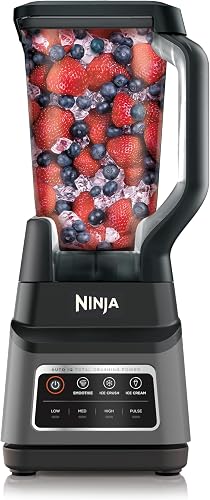
Ninja Professional Plus BN701: Best for family smoothie routines
- 1400 peak watts
- 72 oz pitcher with 64 oz max liquid capacity
- 3 Auto-iQ programs
- Top-rack dishwasher-safe pitcher and blade assembly
The BN701 suits households that share smoothies and frozen drinks. Its preset cycles simplify batch blending without adding cups or a processor bowl to store.
Pros
- Three timed Auto-iQ programs
- Large pitcher for shared drinks
- Pitcher and stacked blade assembly are top-rack dishwasher safe
Cons
- No single-serve cups included
- No food processor bowl included
Choose the BN701 when you usually make one recipe for several people. Its 3 Auto-iQ programs combine timed blending, pulsing and pauses, so you can select a cycle instead of managing each step yourself.
That suits a household repeating similar smoothie or frozen-drink recipes. Once the ingredient amounts work for you, keeping the same recipe and program makes the process easier to repeat.
The tradeoff is portion handling. If one person wants berries and another wants a different drink, you still need separate pitcher batches or another container for serving and storage.
Skip it if your main goal is blending directly into a cup you can carry. A preset pitcher does not remove the extra pouring and pitcher cleanup from a one-person breakfast.
The BN701 also makes sense if you want fewer attachments in your cabinets. Our Ninja Professional Plus BN701 review gives more detail on this pitcher-focused choice.
Ninja Blender Pro+ BL660: Best for smaller take-along drinks
- 1100 watts
- 72 oz pitcher with 64 oz max liquid capacity
- Two 16 oz cups with spout lids
- 3 manual speeds, pulse and single-serve function
The BL660 combines a shared pitcher with smaller personal cups. It fits households where people want different drinks and prefer manual controls.
Pros
- Includes two cups with spout lids
- Dedicated single-serve function
- Removable parts are top-rack dishwasher safe
Cons
- No Auto-iQ presets
- Personal cups offer less room than the BN751's cups
Choose the BL660 when your routine switches between a shared pitcher and separate personal drinks. Its two 16 oz cups with spout lids suit smaller smoothies or shakes you want to carry.
The single-serve function gives the cups a clear role in the system. You can prepare different recipes without first making a full pitcher of one drink.
Its 3 manual speeds and pulse suit people who want to watch the texture and decide when to stop. That control is useful when one recipe needs a short mix and another needs more blending.
Skip the BL660 if you want programmed drink cycles. Also consider the larger-cup BN751 if your usual recipe leaves too little room for ingredients below a smaller cup's fill line.
Two cups help with separate servings, but they still need cleaning between uses. Plan a place for the lids and cup blade assembly rather than leaving loose parts around the sink.
Ninja Professional Blender BL610: Best for occasional batch blending
- 1000 watts
- 72 oz pitcher with 64 oz max liquid capacity
- Total Crushing blades
- BPA-free, top-rack dishwasher-safe pitcher
The BL610 fits buyers who want a pitcher for shared drinks without a collection of attachments. Manual push buttons keep the control setup straightforward.
Pros
- Full-size pitcher for shared batches
- Manual push-button controls
- Pitcher is top-rack dishwasher safe
Cons
- No single-serve cups included
- No preset blending cycles
Choose the BL610 when you want a full-size pitcher for occasional smoothies, frozen drinks or shared recipes. Its manual push-button controls keep the buying decision focused on basic pitcher use.
It suits buyers who already know they do not want personal cups or food processor attachments. There is little reason to store those extras if your drinks always go into glasses at home.
Manual operation means you decide how long to blend and when to stop. Pay attention to ingredient movement and texture rather than assuming every recipe needs the same run time.
Skip the BL610 if your main reason for replacing a blender is easier single-portion preparation. It also will not provide the programmed blending patterns available on the Auto-iQ models.
For a household that blends only a few shared recipes, this simpler package is a sensible match. Choose the BN701 instead if preset convenience is the feature you expect to use most.
Ninja Kitchen System Pro BL770: Best for drinks and meal prep
- 1500 watts
- 72 oz pitcher with 64 oz max liquid capacity
- 8-cup food processor bowl
- Two 16 oz cups with to-go lids
The BL770 adds chopping and dough tools to a pitcher-and-cup setup. Choose it when food preparation is a weekly task rather than an occasional idea.
Pros
- Includes a processor bowl and chopping blade
- Dedicated dough blade
- Includes two personal cups
Cons
- More containers and blades to store
- Processor attachments add little value for drinks alone
Choose the BL770 when drinks and food preparation both have a regular place in your week. Its 8-cup processor bowl comes with separate chopping and dough blades, alongside the pitcher and personal cups.
The processor bowl matters because chopping vegetables and blending a drink are different jobs. You can aim for chopped pieces in the bowl instead of adding liquid to make ingredients circulate in a pitcher.
Ninja says the dough blade can mix up to 2 lb of dough in 30 seconds. Follow the recipe and machine instructions for dough type, loading and limits rather than treating that amount as a target for every batch.
Skip this system if your food-prep plans are vague. An unused bowl and extra blades take storage space without improving your morning smoothie.
Before choosing it, name the jobs you will use it for each week. Our blender vs food processor guide explains which tasks justify the separate bowl.
Ninja Professional Blender 2.0 BR201AMZ: Best for adjustable frozen drinks
- 1200 watts
- 72 oz pitcher with 64 oz max liquid capacity
- Crush Auto-iQ program
- Low, medium, high and pulse settings
The BR201AMZ suits frozen-drink makers who want a Crush cycle plus manual adjustment. It keeps the package focused on pitcher blending.
Pros
- Crush Auto-iQ program
- Manual speeds and pulse
- Pitcher, lid and blades are top-rack dishwasher safe
Cons
- One preset rather than the BN701's three
- No personal cups included
Choose the BR201AMZ when frozen drinks are a regular use and you want both a preset and manual adjustment. Its Crush Auto-iQ program sits alongside low, medium, high and pulse settings.
That combination suits someone who wants a guided cycle for frozen ingredients but prefers to judge other recipes by sight. Pulse also gives you a way to work in short bursts rather than committing to a longer run.
It is a pitcher-only choice, so it fits shared drinks served at home. You do not have personal cups or a processor bowl to organize.
Skip it if several programmed options are the main attraction. The BN701 offers more presets, while the cup bundles better suit individual take-along drinks.
Choose this model for its control mix rather than assuming the newer-sounding name makes it right for every kitchen. The useful question is whether you will use both Crush and the manual settings.
Ninja Professional Plus DUO BN751: Best for larger personal smoothies
- 1400 peak watts
- 72 oz pitcher with 64 oz max liquid capacity
- Two 24 oz cups with spout lids
- 3 Auto-iQ programs
The BN751 combines larger take-along cups with preset blending and a shared pitcher. It suits a routine that switches between individual smoothies and household batches.
Pros
- Two larger cups with spout lids
- Three Auto-iQ programs
- Pitcher, cups and stacked blade assembly are top-rack dishwasher safe
Cons
- Extra cups need storage space
- No processor bowl for chopping or dough
Choose the BN751 when personal smoothies are central to your routine and you also want a shared pitcher. Its two 24 oz cups with spout lids offer more container room than the smaller cups in the BL660 bundle.
The 3 Auto-iQ programs cover smoothies, frozen drinks and fruit-and-vegetable drinks. Ninja calls the last function nutrient extraction; it blends those ingredients into a drink rather than separating juice from pulp.
This package is a better match than the BN701 if you expect to blend individual drinks most mornings. The pitcher remains useful for weekends or times when several people want the same recipe.
Skip it if your usual drink is small and you prefer a smaller container to carry. Measure the space where you plan to store or transport a cup instead of choosing by capacity alone.
The BN751's place in the order should not outweigh that fit. For a larger personal smoothie with preset controls, it is the most direct match here.
Ninja UltraCrush BP201: Best for simple shared drinks
- 1000 watts
- 72 oz pitcher with 64 oz max liquid capacity
- Low, High and Max speeds
- BPA-free, dishwasher-safe parts
The BP201 fits buyers who want three clear speed choices and a shared pitcher. It leaves out personal cups and preset cycles.
Pros
- Three clearly named speed settings
- Full-size pitcher for shared drinks
- BPA-free, dishwasher-safe parts
Cons
- No personal cups included
- No preset cycles or separate pulse control specified
Choose the BP201 when you want a shared pitcher and a short set of clearly named controls. Its Low, High and Max speeds leave you in charge of the blend.
That setup suits recipes you are comfortable watching and adjusting yourself. You can stop when the texture is right rather than choosing a preset designed around a particular drink.
It is also a focused package for buyers who do not want to sort through extra cups and bowls. The included setup centers on the pitcher and stacked blade assembly.
Skip it if you rely on a separate pulse button for short bursts. A preset model is also a better fit if you want the machine to follow a timed sequence.
Compare it with the BL610 around the controls you prefer. Neither should be chosen on the assumption that a basic pitcher package can cover every job of a multi-container kitchen system.
How should you choose a Ninja blender for your routine?
Choose by serving size first, controls second and storage third. Power is part of the design, but it does not tell you whether a bundle fits your daily use.
Which is the best Ninja blender for your serving size?
Choose a pitcher if several people usually share the same recipe. Choose personal cups if drinks differ by person or you want to blend a serving directly in its carrying container.
Write down your actual recipe before choosing cup size. Liquid, fruit, yogurt and frozen ingredients all need room, and the marked fill limit governs how much you can load.
Do not choose the largest container simply because it holds more. A small recipe in a large pitcher may be harder to keep moving than a properly sized batch.
Likewise, a large pitcher is useful only if you want several servings at once. Repeatedly pouring one drink out of it leaves you cleaning a shared-batch container for a single portion.
Should you choose Auto-iQ or manual controls?
Choose Auto-iQ for a repeatable programmed sequence and manual controls when you prefer to judge texture yourself. Presets combine changes in speed and pauses, but ingredient amounts still affect the result.
An automatic cycle does not correct a recipe packed too tightly with frozen ingredients. You still need a suitable liquid balance, room for movement and the correct container setup.
Manual control is useful for recipes where a few extra seconds can change the texture you want. Stay with the machine and stop to check instead of extending a blend by habit.
When are processor attachments worth storing?
Choose the BL770's processor setup if chopping or dough preparation is already part of your week. Buy around existing habits rather than a long list of recipes you might someday make.
A pitcher and processor bowl handle ingredients differently. For chunky food prep, adding liquid just to make a pitcher circulate can turn the recipe into something you did not intend.
Storage includes more than the bowl itself. Allow a safe place for each blade, lids and cups, with pieces easy to reach when you need them.
How much should wattage influence your choice?
Use wattage as one detail, not a performance ranking. The BN701 and BN751 use peak-watt figures, which should not be treated as directly equal to every other power figure in this group.
A higher number does not guarantee a finer texture, quieter operation or better results from a poorly loaded container. Those outcomes also depend on the recipe, container and blade system.
Our guide to what blender wattage you need explains the role of power. Among these models, the included containers and controls offer clearer reasons to choose one package over another.
How do you set up a Ninja blender for the first use?
Wash the removable food-contact parts, assemble the correct container and check that everything locks into place before blending. Use the instructions for your exact model because pitcher and personal-cup assembly steps can differ.
Place the base on a clean, dry, level counter with room to remove the lid. Check overhead clearance with the pitcher fitted, especially if the blender will sit beneath cabinets.
Match each blade assembly to its intended container. Similar-looking Ninja accessories are not a reason to assume that cups, lids or blades fit another model.
Handle a stacked blade assembly by its designated grip and keep fingers away from the cutting edges. Never reach into the pitcher to move ingredients while it is attached to a powered base.
For your first recipe, follow the included guidance rather than filling the container by eye. A familiar smoothie recipe makes it easier to learn the controls without also working out a new ingredient balance.
Start with a modest batch, check the result and adjust one ingredient at a time. Changing liquid, frozen fruit and run time together makes it harder to know what improved the texture.
How can you get better smoothies and frozen drinks?
Keep ingredients moving by using enough liquid and a sensible frozen-to-liquid balance. More blending time will not solve a mixture that stays packed above the blades.
Follow the loading order for your container. A pitcher and an inverted personal cup position their blades differently, so the same loading advice does not automatically apply to both.
Cut large ingredients into manageable pieces before loading. Remove pits and other hard, inedible parts, and avoid forcing tightly packed chunks into the container.
For a thicker drink, begin with a recipe that already circulates, then adjust future batches gradually. Adding a large amount of ice at once can make the mixture harder to move and dilute the flavor as it melts.
If the mixture stalls, stop and disconnect power before adjusting it. Add a little suitable liquid or reduce the load, then secure the container before starting again.
For individual protein shakes, leave enough room for powder and liquid to mix. Do not pack powder into the blade area or assume a full cup will mix better with extra run time.
Serve frozen drinks soon after blending for a more even texture. If you prepare ingredients ahead, portion them separately so you can blend the amount you need.
How should you clean and care for a Ninja blender?
Clean food-contact parts soon after use and keep the motor base out of water. Dried smoothie residue is harder to remove from lids, seams and blade assemblies.
Unplug the base before removing parts for cleaning. Keep sharp assemblies visible on the counter rather than dropping them into cloudy dishwater where someone could reach onto them.
Dishwasher instructions vary by part and model. Follow the specified rack position and care directions instead of assuming every accessory can go anywhere in the dishwasher.
For washing by hand, use a brush that keeps your fingers away from blade edges. Do not wipe along an edge with a cloth or reach blindly beneath the blades.
Check lid grooves and seals for trapped food, following the manual before removing any parts. Rinse well and let everything dry before closing containers or putting them away.
Wipe the base with a damp cloth and keep liquid away from its controls and electrical parts. Inspect containers and seals for damage before the next use.
Our Ninja blender cleaning guide covers the care routine in more detail. Store sharp attachments securely so they cannot shift into a hand reaching into a drawer.
Which common Ninja blender mistakes should you avoid?
Avoid overfilling, forcing stalled ingredients and buying unused attachments. These choices create more trouble than choosing between nearby wattage figures.
- Treating full container capacity as usable liquid capacity. Follow the marked limit, including the separate limit on a personal cup.
- Using a preset as a substitute for recipe balance. A timed cycle still needs ingredients that can move through the blades.
- Adding more frozen food to fix a stalled blend. Stop first and restore movement with an appropriate recipe adjustment.
- Using a cup for ingredients it is not approved to handle. Follow the exact model instructions, especially for temperature limits.
- Pouring without checking the blade assembly. Follow the manual's pouring procedure and never assume a removable assembly is secured to the pitcher.
- Buying a processor bundle only for smoothies. The extra bowl helps with food prep, but does not simplify a cup-only breakfast routine.
Do not assume a blender can safely handle hot soup because it can blend cold ingredients. Check the model's temperature restrictions and let ingredients cool as directed before using an approved container.
Also avoid treating all blender jobs as interchangeable. Thick dough, chopped vegetables and flowing drinks call for different tools and limits, even when one motor base supports several containers.
Which best Ninja blender should you choose?
Pick the BN701 for shared drinks with preset convenience, the BL660 for smaller personal drinks or the BN751 for larger take-along smoothies with programs. Choose the BL770 when chopping and dough preparation justify a separate processor bowl.
For pitcher-only manual use, choose between the BL610 and BP201 by the controls you prefer. The BR201AMZ is the middle path if a Crush preset and manual adjustment both have a clear role in your recipes.
Before ordering, write down your usual serving size, whether drinks leave the house and where the parts will go. Those answers will narrow the best Ninja blender choice faster than comparing power numbers again.
Use our Ninja blender guide for more brand context. If your decision also includes a different blender brand, continue with our Ninja vs Vitamix guide.
Our top 3 picks at a glance
-
1
-
2
-
3
Best for occasional batch blending
Ninja Professional Blender BL610
8.8/10 our score
See it on Amazon
Frequently asked questions
Which Ninja blender is best for most people?
The Ninja Professional Plus BN701 is the best choice here for households that make shared smoothies and frozen drinks. Its preset cycles suit a repeatable family routine.
Choose a cup bundle instead if individual drinks are your main use, or the BL770 if you also need chopping and dough tools.
Which Ninja blender comes with personal cups?
The BL660 and BL770 each include two 16 oz personal cups, while the BN751 includes two 24 oz cups. All three also have a full-size pitcher.
Choose around your usual portion, leaving room below the cup's marked fill limit rather than treating its full capacity as a recipe target.
Can a Ninja blender crush ice?
All seven models here include Total Crushing blades or technology intended for ice and frozen ingredients. For frozen drinks, follow the model's recipe guidance for liquid, ice and batch size.
If ingredients stop moving, stop the machine and adjust the mixture instead of repeatedly running a stalled blend.
Which Ninja blender also works as a food processor?
The BL770 is the food processor option in this group, with an 8-cup bowl, chopping blade and dough blade. Its separate bowl suits food preparation that calls for chopping or mixing rather than a drinkable blend.
Choose it only if those tasks justify storing and cleaning the extra attachments.
What is the difference between a Ninja pitcher and personal blender?
A pitcher suits shared batches, while a personal cup suits individual recipes and carrying your drink. A combined setup gives you both options, but adds parts to store.
If you rarely serve more than one person, our best personal blenders guide can help you compare a smaller setup.